

We have an excellent technical team, our products in quality and quantity will make you satisfied, welcome to buy

Views: 0 Author: Site Editor Publish Time: 2025-12-16 Origin: Site
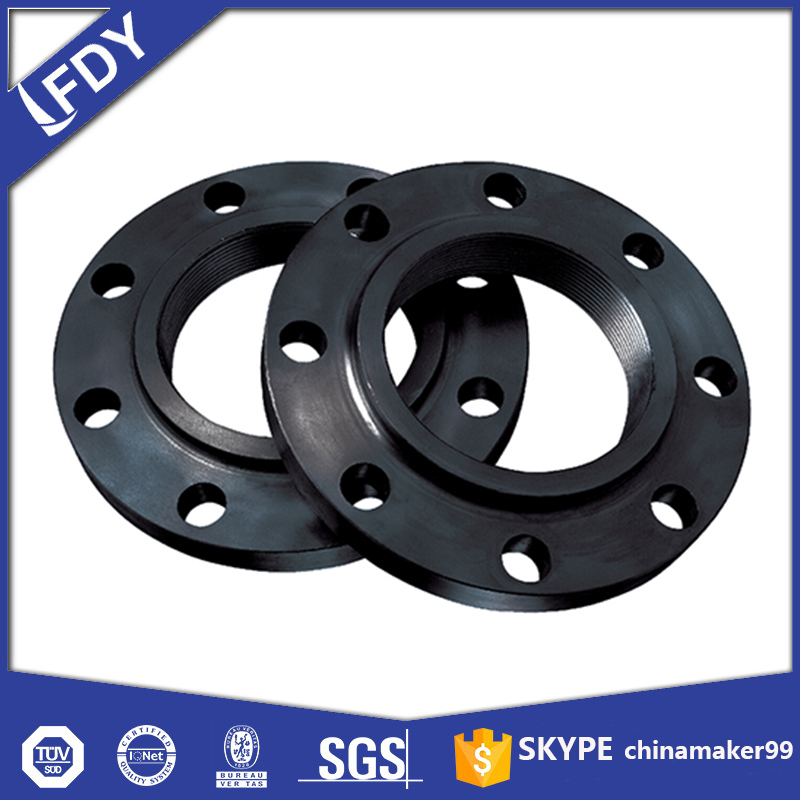
In the vast body of modern industrial systems, there are countless connection points that tightly connect pipelines, equipment, and containers like joints, forming a complete pathway for material flow. Carbon steel flanges are the most common but crucial type of these joints. Although not eye-catching, it supports the normal operation of many key fields such as energy transmission, chemical production, and water conservancy engineering, becoming an indispensable silent hub in industrial infrastructure.
The main material for carbon steel flanges is carbon steel, which is an alloy based on iron and carbon. Due to its balance between strength, plasticity, and economy, it has become one of the preferred materials in the industrial field. The carbon content in carbon steel directly affects its mechanical properties: low carbon steel has good plasticity and weldability, and is suitable for general pressure environments; Medium to high carbon steel provides higher strength and can withstand more stringent working conditions. The use history of flanges can be traced back to the early stages of the Industrial Revolution. With the development of steam power and pipeline systems, the demand for reliable connection methods has become increasingly urgent. Early flange designs were relatively simple and often produced using casting or forging processes. With the advancement of industrial technology, especially the rapid development of industries such as petrochemicals and power, the design, materials, and manufacturing processes of flanges have been continuously improved, gradually forming today's standardized and serialized product system.
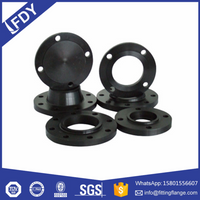
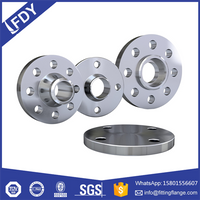
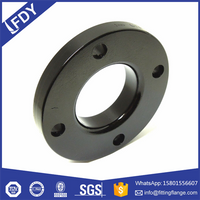
The core advantage of carbon steel flanges lies in the perfect fit between their material properties and structural design. Carbon steel, as a basic industrial material, has high strength, good toughness, and impact resistance, and can withstand pressure, temperature changes, and medium erosion during the operation of pipeline systems. The carbon steel flange processed on this basis can achieve rapid and precise docking between pipelines through reasonable structural design. Its common structural forms include flat welding flanges, butt welding flanges, socket welding flanges, etc. Different structures correspond to different connection requirements, which can not only meet the simple connection of low-pressure pipelines, but also adapt to the sealing requirements of high-pressure and high-temperature working conditions, demonstrating strong scene adaptability.
A notable feature of the industrial sector is high standardization, and carbon steel flanges are no exception. The internationally recognized standard system provides detailed regulations on the pressure rating, size range, material requirements, and testing methods for flanges. This standardization not only ensures the interchangeability of products from different manufacturers, but also makes flanges a truly "universal language" in the global industrial system. In complex pipeline systems, carbon steel flanges rarely exist alone. It forms a complete fluid treatment system together with valves, pumps, containers, and other equipment. The connection characteristics of flanges make system modularization possible: standardized interfaces allow for equipment prefabrication and quick installation, greatly improving engineering efficiency. This' composability 'is an important foundation for modern industry to rapidly expand and flexibly adjust.
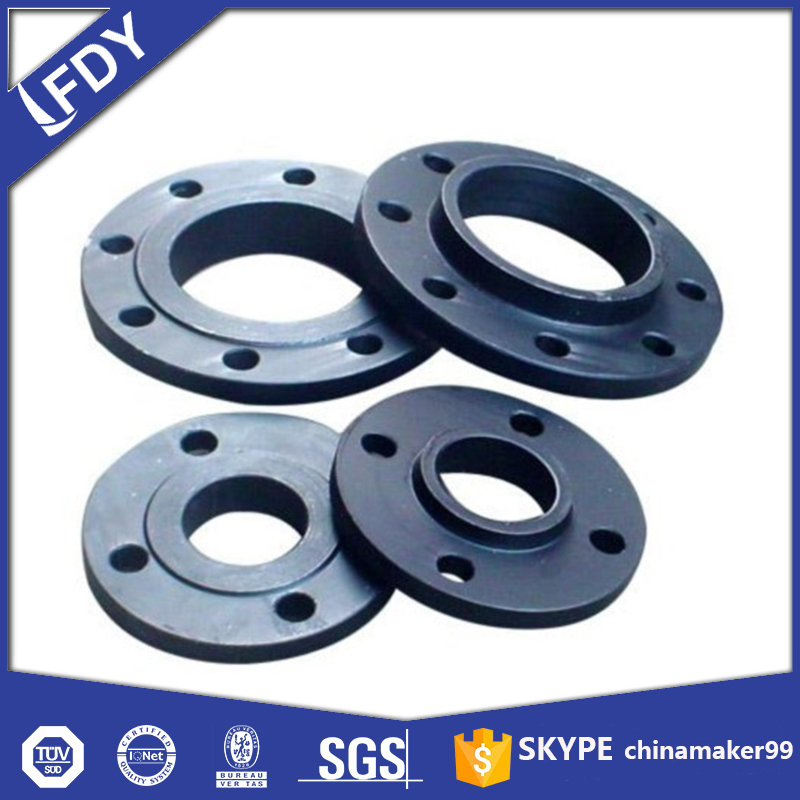
The application scenarios of carbon steel flanges cover almost all industrial fields and have become the preferred component for pipeline system connections. In the petrochemical industry, it is used for connecting crude oil pipelines and chemical reaction equipment, and can withstand the test of high temperature, high pressure, and corrosive media; In the field of power energy, carbon steel flanges are widely used in steam pipelines and water circulation pipelines in thermal power and nuclear power projects to ensure stable and efficient energy transmission; In the construction of municipal infrastructure, the municipal water supply and sewage treatment pipeline systems are connected in sections using carbon steel flanges, which facilitates later maintenance and repair; In the metallurgical and mining industries, it can adapt to working conditions with high dust and strong vibration, ensuring the continuous operation of material conveying pipelines.
Seemingly simple carbon steel flanges carry the core mission of connecting industrial pipeline systems. It has become an indispensable basic component in industrial production due to its material reliability, structural adaptability, and wide range of applications. In the wave of industrial intelligence and green development, carbon steel flanges will continue to improve their performance through technological innovation, providing more solid support for the safe and efficient operation of various industrial pipeline systems, and assisting in the high-quality development of industrial systems.
Each carbon steel flange is a miniature of industrial civilization: they are made of the most common materials, rigorously designed and precisely processed, and ultimately bear the responsibility of supporting modern society. When we discover their presence in the underground pipelines of cities, in the oil pipelines spanning mountains, and in the massive equipment of power plants, we may be able to feel the weight carried by these silent components - they are not only material connectors, but also the joints that allow industrial systems to extend and expand, serving as technological bridges for humans to transform natural resources into social welfare.